Short answer: the best automatic gate maintenance tips are simple. Keep the photo eyes clean, keep the track and hinges free of debris, lubricate the moving parts that are exposed, keep bugs and water out of the control box, and replace remote and backup batteries before they die. Those five habits prevent most of the service calls we see.
These are the tips our techs give homeowners across Portland and the Seattle area. Every one of them is something you can do safely without opening the operator.
1. Keep the gate and its sensors clean
Dirt on a photo-eye lens can make a gate reverse for no visible reason. Wipe both lenses with a soft dry cloth once a month, and after any storm. Hose mud and grit off the bottom of the gate and the slide track, and let it dry before you run the gate. In fall, rake leaves and fir needles out of the swing path. Wet leaf piles hold water against hinges and posts.
2. Keep pests out of the control box
Ants, spiders and mice love the warm, dry inside of an operator or control box. They chew wire insulation and build nests across circuit board contacts, and that can short the board. Keep the cover closed and sealed, clear vegetation away from the base, and set bait outside the unit, not in it. If you see droppings or nests, call a tech to clean the board rather than spraying anything inside.
3. Lubricate what you can see
Exposed hinges, rollers and the guide wheels on a slide gate should get a light coat of silicone or white lithium spray a few times a year. Skip heavy grease on anything outside. It collects grit and turns into grinding paste. The chain and gears inside the operator are part of a professional service.
4. Watch the battery backup
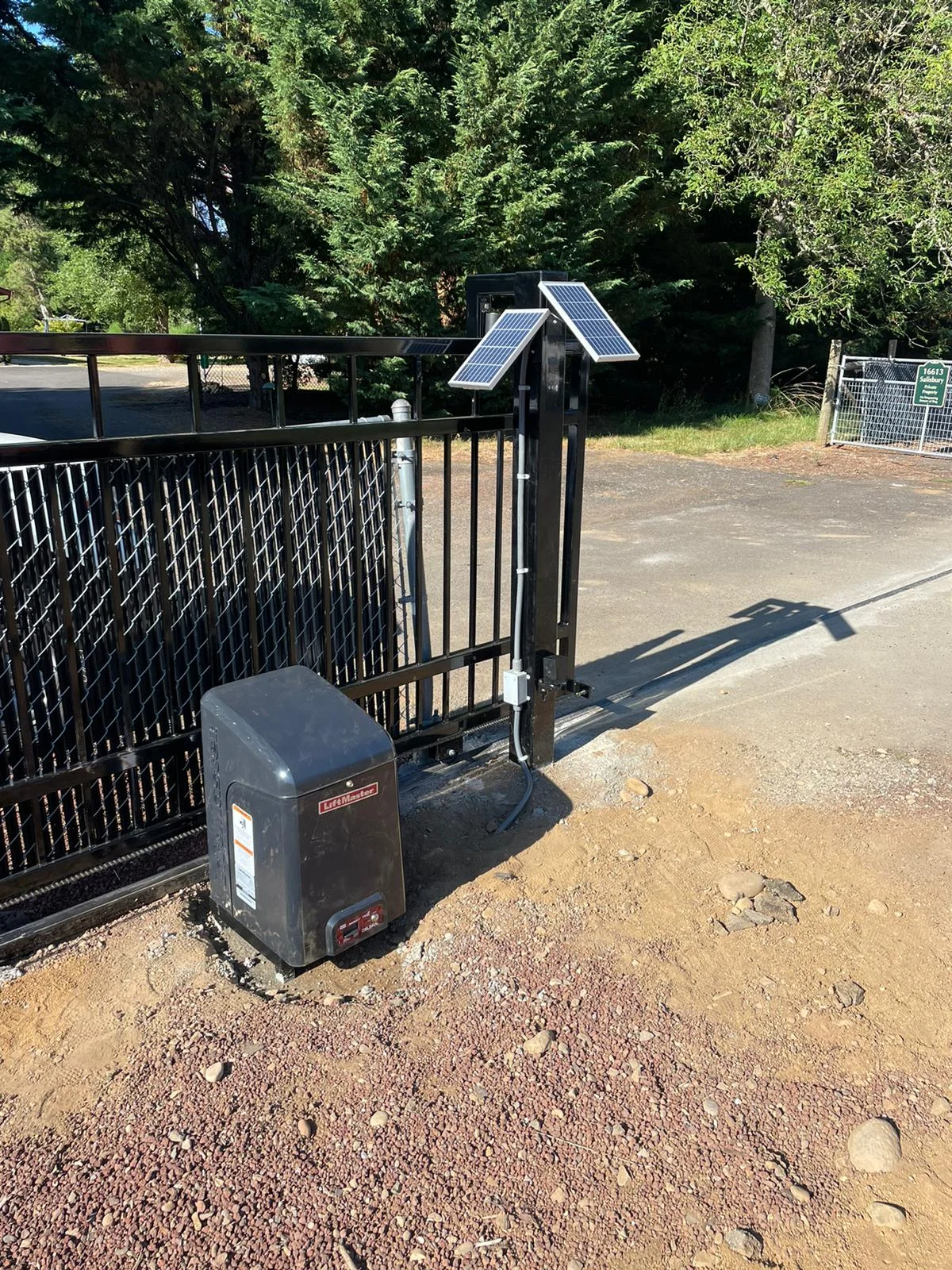
Many operators have a backup battery so the gate still works in a power outage. Those batteries usually last two to three years. If your gate has slowed down, or only works partway when the power flickers, the battery is a likely cause. A tech can load-test it during a maintenance visit.
5. Keep the electronics up to date
Older circuit boards and receivers are more sensitive to surges and interference, and parts for some discontinued operators are getting hard to find. If your opener is over 10 to 15 years old, ask about upgrade options before it fails. A surge protector on the operator’s supply is cheap insurance.
6. Do a monthly safety test
Stand well clear and put a trash bin in the gate’s path while it closes. It should stop and reverse; operators built to UL 325 are designed to. If it doesn’t, stop using the gate until it has been checked. This matters most if kids or pets are around the driveway.
Automatic gate maintenance tips: what to leave to a pro
- Adjusting force, speed or open and close limits
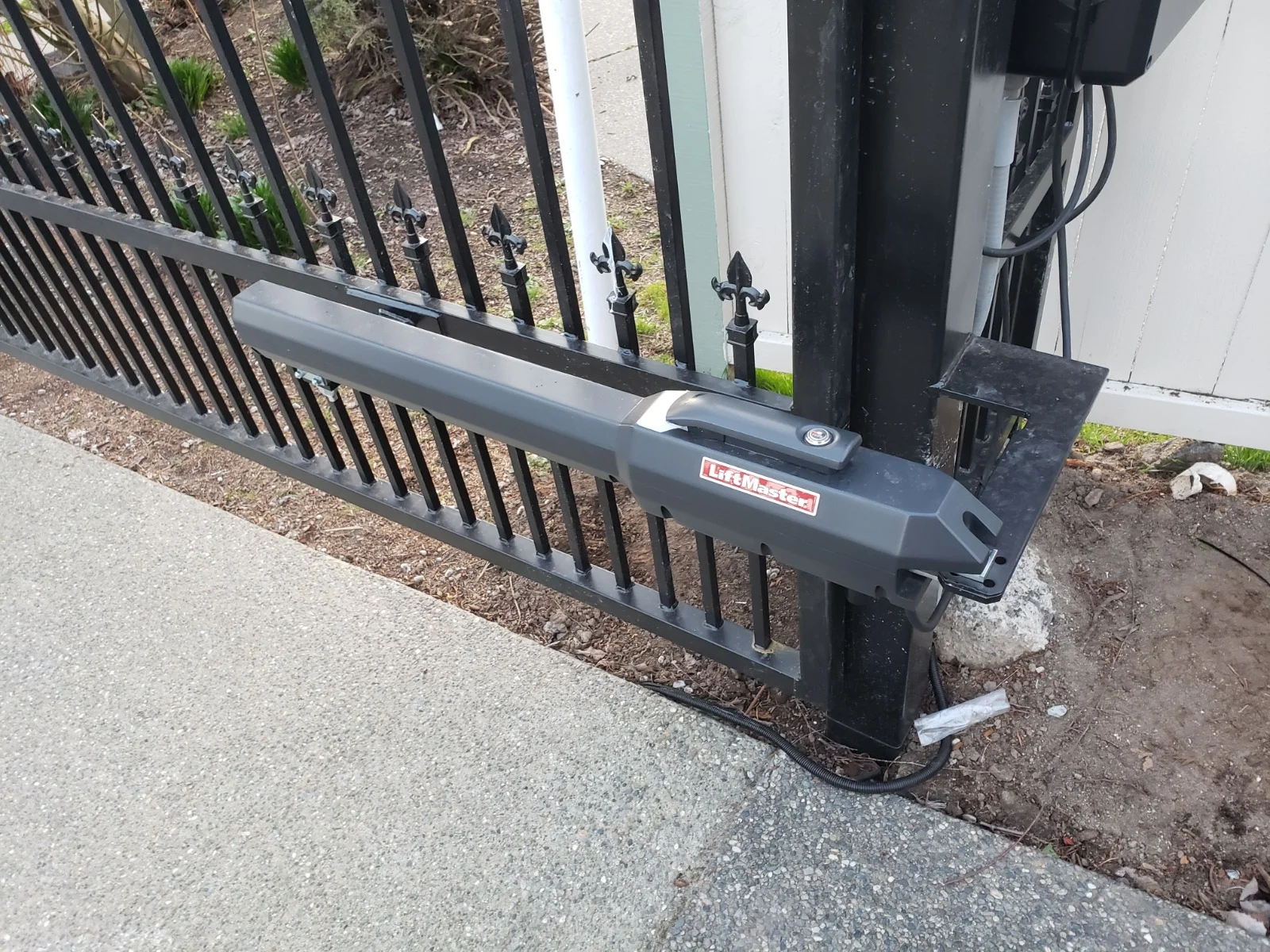
- Anything inside the operator cover or control box
- Wiring, circuit boards and line-voltage power
- Re-hanging a sagging gate or fixing a bent track
Our techs service every major brand, including LiftMaster, DoorKing, Apollo and Viking. A full maintenance visit is a flat $395.
Frequently asked questions
What lubricant should I use on an automatic gate?
A silicone or white lithium spray on exposed hinges and rollers. Avoid WD-40 as a long-term lubricant and avoid heavy grease outdoors.
How long do gate opener batteries last?
Usually two to three years. Heat, cold and frequent power outages shorten that.
How often should a professional service my gate?
Once a year for a home gate. Every three to six months for busy commercial or HOA gates. See our gate maintenance schedule for the full checklist.
Book maintenance: Portland (503) 455-7393 or Seattle (425) 470-4166.